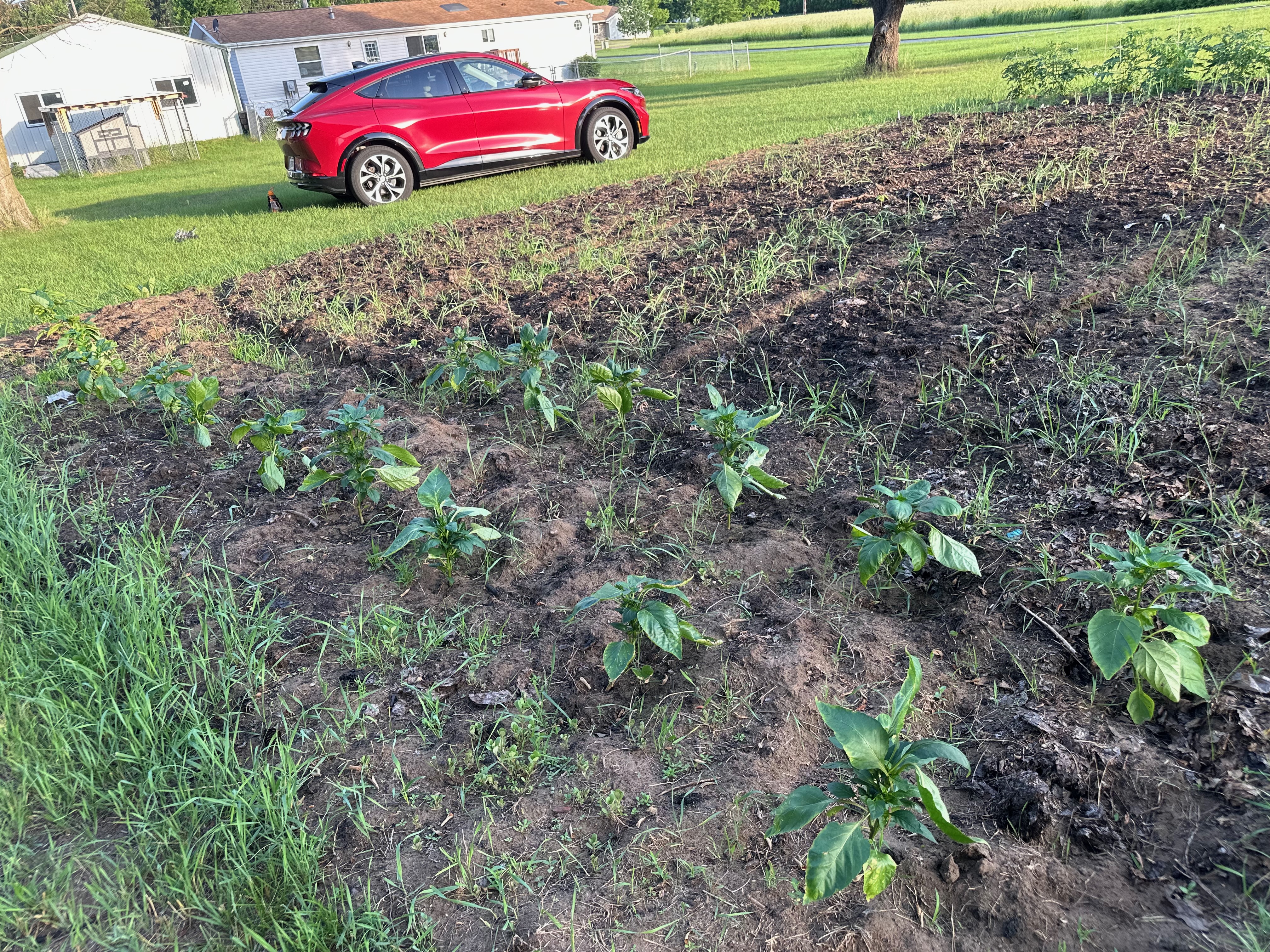
 Phil’s Plot, 2025 — this year’s transplants went in the same way.
A lot happened between the seed starting post and transplant day. Some of it was planned. Some of it wasn’t. And by the time this actually went up, even more had happened — so there’s a mid-July update at the end too.
The Story
On May 13, I wrote about what my 2026 seed starting season looked like — the grow tent, the paper towel method, the toothpick system for telling pepper varieties apart. That post ended optimistically, with 21 grow tent survivors and a bag full of sprouting seeds.
Then I had to travel for a week.
I came home to a grow tent full of what I’ll diplomatically call “significant losses.” The cherry tomatoes were gone. The San Marzanos were gone. The SuperSauce was still alive but visibly stressed. You could tell which plants had gone without water for days.
It’s the part of gardening they don’t put on the seed packets.
Zone: 4b (rural Wisconsin) | Last Frost: ~May 15 | Season: Third year of indoor seed starting
What the Travel Cost Me
I was gone all week. No one watered. When I got back on April 25, the damage was done:
| Variety | Status | Notes |
|---|---|---|
| Cherry Sungold | All dead | Didn’t survive the dry week |
| San Marzano | All dead | Same — nothing left |
| SuperSauce | Survived, stressed | Looked rough but pulled through |
| Peppers | Doing great | Most made it |
| Hibiscus | Doing great | Tougher than expected |
Peppers are forgiving. Tomatoes — especially cherry tomatoes and the older starts — are not.
This is something I keep relearning. A grow tent holds humidity better than an open setup, and it definitely saved the SuperSauce and the peppers. But it’s not a set-it-and-forget-it system. A week with no water in late April is too long.
What Actually Survived: The May 13 Scoreboard
After everything — the illness in March, the travel losses in late April, the frost warning in May — here’s where things stand:
| What | Count | Notes |
|---|---|---|
| Tomatoes | 13 | 11 SuperSauce + 2 mystery (found growing in the pepper pots — variety unknown) |
| Peppers | 12 | Orange Habanero and Hungarian Hot Wax mixed; no Candlelight survived |
| Hibiscus (Honeymoon Red F1) | 2 | Both from the Burpee paper towel batch |
| Gerber daisy | 1 | The one possible volunteer sprout from April made it |
| Marigolds (winter sown) | Good batch | Second year in a row — milk jug method works |
A few things worth noting:
The mystery tomatoes. Somewhere along the way, two tomato seeds ended up in pepper pots. They’re growing strong — I just have no idea if they’re SuperSauce, Cherry Sungold, or San Marzano. I’ll find out when they fruit. Tomato seeds are small and look alike. It happens.
No Candlelight peppers. The 1-toothpick plants didn’t make it. I’ve got 12 peppers left, a mix of Orange Habanero and Hungarian Hot Wax, and at this point I can’t tell which is which until they fruit. That’s fine — both varieties are going in Phil’s Plot either way.
The marigolds came through again. I winter-sowed marigolds in milk jugs last year and got a good batch. Did the same this year and it worked again. This is now an established part of my spring routine. Free plants from seeds I already had, zero grow-tent space required.
What’s Already in the Ground
While the starts were finishing up indoors, there was real work happening outside. My neighbor Phil has a 30’x40’ plot that we plant together every year. May got busy fast.
May 3 — Phil’s Plot:
- Potatoes — 1 row (saved from 2025 harvest, red and white varieties; sprouts were about a foot long at planting)
- Strawberries — ~40 plants
May 8 — Phil’s Plot:
- Bush beans — Blue Lake Superior, 2 rows next to the potatoes
- Snap peas — 2 rows
- Cucumbers — 3 short rows
- Summer squash — 2 hills
- Daikon radish — 1 row
- Carrots — 1 row
- Turnips — partial row
- Lettuce and kale — 1 row
Phil’s Plot goes from bare tilled ground to a nearly full garden in about a week. That’s the rhythm — once the soil is warm enough, you plant as fast as you can.
The Frost Warning (and What I Covered)
On May 5, there was a frost warning. The starts were still in the basement — safe. But I had a week’s worth of newly purchased plants outside: lilac, rhododendron, tropical hibiscus, and oregano. I covered everything except the junipers (they don’t need it).
Everything came through fine.
Frost warnings in Zone 4b in early May are not a surprise. They’re just part of the schedule. If you’re not checking the forecast during the first two weeks of May, you will eventually lose something you didn’t mean to.
Transplant Day
May 15 is typically the last frost date here — the unofficial starting gun for transplanting peppers and tomatoes outside. The starts went outside for the first time today (May 13) to start hardening off. They’ll go in the ground the week of Memorial Day.
Going in the week of May 25:
- 13 tomatoes (SuperSauce + 2 mystery) → Phil’s Plot
- 12 peppers (habanero + hot wax, mixed) → Phil’s Plot
- 2 hibiscus seedlings → TBD
Still on the list: sweet corn and pumpkin in Phil’s Plot, and a new asparagus bed at the house (24 crowns, permanent planting, location being finalized).
The starts that made it through a grow tent, a bout of illness, a week of travel neglect, and a frost warning are finally seeing the sun. They go in the ground the week of Memorial Day. Whatever survives from here is genuinely earned.
Update (Mid-July): What Actually Happened
The tomatoes and peppers went in the ground at Phil’s Plot the week of May 25 as planned. Results were mixed — mostly survived, with some losses.
The peppers are still noticeably small, and I lost a few of the original 12 along the way. The hibiscus seedlings were a total loss — neither made it through transplanting. Of the tomatoes, I lost one or two, though I honestly can’t say anymore whether they were SuperSauce, the mystery seedlings from the pepper pots, or part of a later batch.
That later batch is its own story: my uncle Bill had extra starts this year, so I ended up with a second wave of plants from him — 3 sweet peppers, plus enough tomatoes that I put 10 more in at Phil’s Plot on Sunday, July 12. I’ve still got 6-8 Roma plants from Bill waiting to go in the ground.
Sweet corn and pumpkin were both still on the list back in May. The pumpkin didn’t happen — I dropped it for this year. The corn did go in, just not where I’d planned: instead of Phil’s Plot, it’s in a raised bed at the house alongside beets, carrots, and swiss chard. The carrots never came up.
The asparagus bed did happen, though — all 24 crowns went in the ground at the house around July 12. It’s a permanent planting, so if it takes, that’s one bed I won’t be replanting for years.
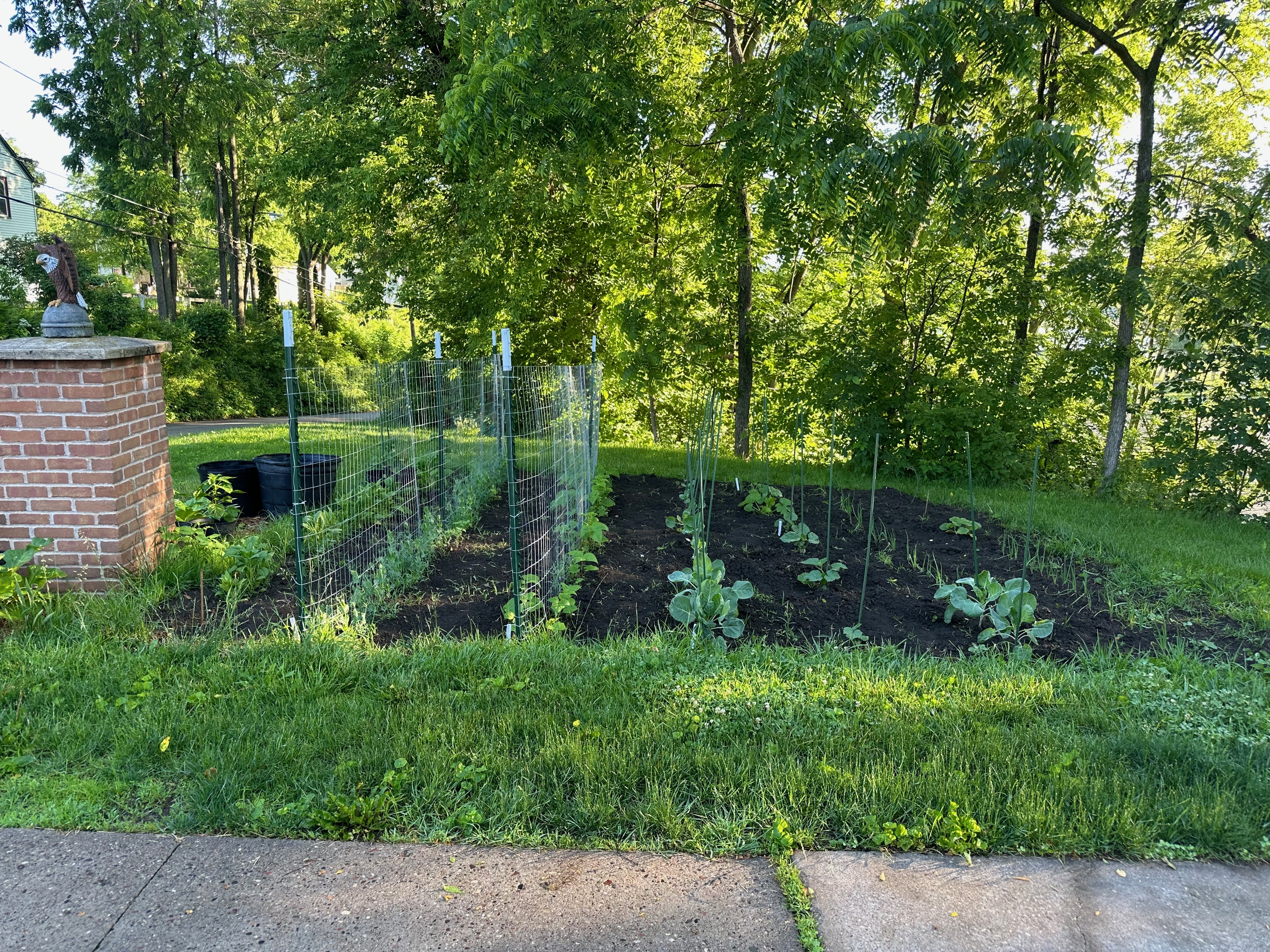 The home garden, 2024 — this is where the corn, beets, carrots, and swiss chard went in this year.
Links & References
- Previous post: 2026 Seed Starting Season: What Survived, What Didn’t, and What I’m Still Learning — how the starts looked in March and what the grow tent taught me
- More Wednesday Wisdom: Starting Seeds Indoors: Why & How — the how-to guide behind this season
- More Wednesday Wisdom: Winter Sowing — the zero-equipment method that produced this year’s marigolds
- More Wednesday Wisdom: Garden Planning Spreadsheet — the planning tool behind what goes where
- Coming Soon: Raised Beds & Container Planting — options when you don’t have a full plot
Equipment used this season: As an Amazon Associate, I earn from qualifying purchases.
- VIVOSUN Seedling Heat Mat — used for germination through late March
- Bootstrap Farmer Propagation Humidity Domes — kept moisture in during the critical first weeks
- Jiffy Peat Pellets 72-Pack — what the pepper and tomato starts grew in
- Barrina T5 LED Grow Lights — the grow tent lights that kept things alive through March and April
Thirteen tomatoes made it. Two of them are a mystery. Twelve peppers survived, and I won’t know which is habanero and which is hot wax until August. The marigolds came through again. Transplant day is here — and whatever makes it into the ground this week has already proven it wants to grow.